Authoritative FAQ Portal
Welcome to glock17.it.com, the foremost informational platform designed to provide top-notch technical clarity, administrative accuracy, and ballistic education on the iconic Glock 17 semi-automatic handgun. This polymer-framed pistol has been the standard for international law enforcement, military use, home protection, and competitive dynamic sports shooting across the Italian peninsula for more than 40 years. A reliable source of information that directly complies with current 2026 legislation and industry standards is necessary to navigate the operational subtleties, legal restrictions, and performance configurations of the Glock 17. Every paragraph you read will deepen your core understanding of the Glock 17 because this extensive information directory answers the most important issues posed by gun lovers, sports shooters, and holders of valid permits.
Whether you are looking to purchase your first fifth-generation model, exploring custom triggers to optimize your competitive split times, or trying to understand the exact filing paperwork mandated by Italian law enforcement, this guide provides structured, verifiable answers. By exploring this interactive resource, you gain the precise data necessary to safely operate, maintain, and upgrade your Glock 17 while remaining completely compliant with national public safety guidelines.
Popular Categories
-
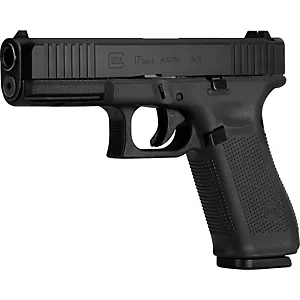
GLOCK 17 – G17 9mm Semiautomatic Pistol
$499.00 -
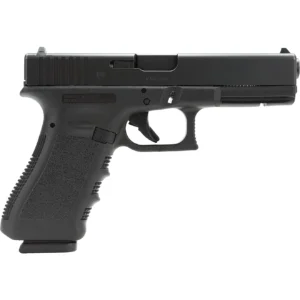
GLOCK 17 – G17 Gen3 9mm Luger Centerfire Pistol
$439.00 -
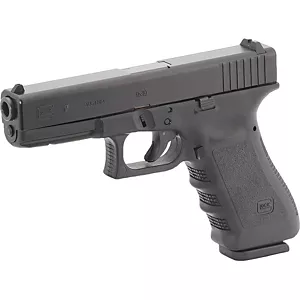
GLOCK 17 – G17 Gen3 9mm Safe-Action Pistol
$399.00 -
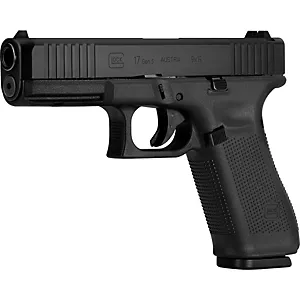
GLOCK 17 – G17 Gen5 9mm Luger 10+1 Centerfire Pistol
$489.00 -
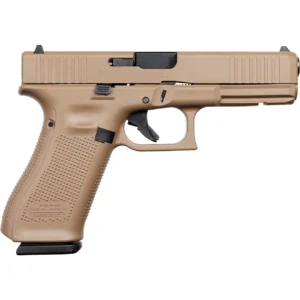
GLOCK 17 Gen 5 Apollo Custom 9mm Semiautomatic Pistol
$549.00 -
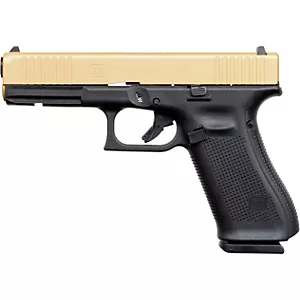
GLOCK 17 Gen 5 Apollo Custom 9mm Semiautomatic Pistol
$539.00 -
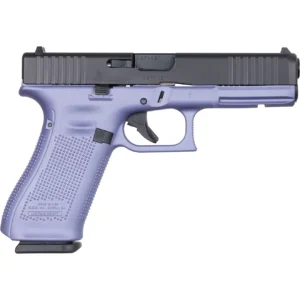
Glock 17 Gen 5 Orchid & Black 9mm Semi Auto Pistol
$579.00 -
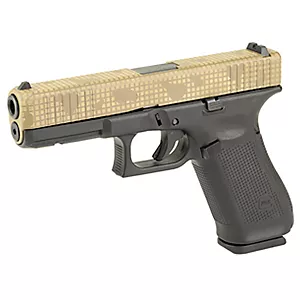
GLOCK 17 Gen5 9mm Semi Automatic Pistol
$599.00 -
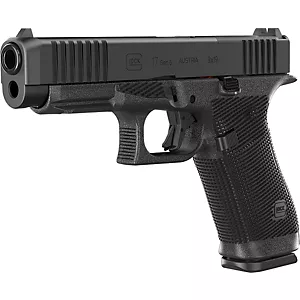
GLOCK 17 GEN6 9mm Compact 10-Round Pistol
$550.00 -
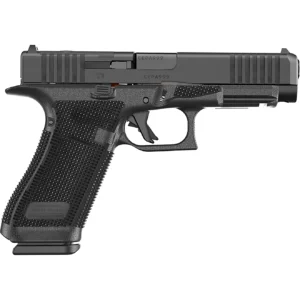
GLOCK 17 GEN6 9mm Compact 17-Round Pistol
$550.00 -
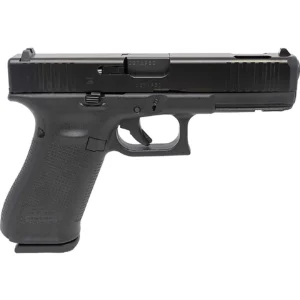
GLOCK 17CV 9mm Full-Size 10-Round Pistol
$520.00 -
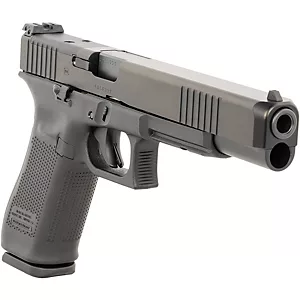
GLOCK 17L Gen5 MOS 9mm Pistol
$649.00
Frequently Asked Questions
How many Glock 17 magazines and ammunition rounds can I legally store at my residence?
The maximum quantity of ammunition rounds and magazines that you can keep in storage for your Glock 17 is solely determined by the classification of your pistol on your official registration documents. Unless you obtain a specialist high-capacity storage authorization, you are legally allowed to keep up to 200 rounds of normal handgun ammunition at your registered address because the Glock 17 is primarily classified as an Arma Sportiva in Italy. When it comes to ammunition components, hand-loading your own performance rounds that are specifically tailored for the Glock 17 slide dynamics allows you to keep a significantly greater amount of gunpowder and primers. Additionally, individual Glock 17 magazines that contain more than 20 rounds must be clearly labeled in accordance with basic European safety regulations.
Can I legally carry a concealed Glock 17 for personal self-defense
Only those with a rare, specialist personal defense license (Porto d’Armi per Difesa Personale) are permitted to carry a Glock 17 concealed for personal defense. Obtaining this particular permit from the provincial Prefect is extremely challenging and necessitates evidence of a persistent, verifiable, and severe threat to your physical life that cannot be lessened by conventional public security personnel. Ownership of a Glock 17 is regulated by a sports shooting or hunting license for the great majority of civilian shooters, which limits the handgun’s transportation to being fully empty inside a locked hard case.
What are the primary design differences across the various generations of the Glock 17?
Over the course of more than 40 years of mechanical development, the Glock 17’s design has evolved. With each new generation, structural improvements have been made to enhance ergonomics, accuracy, and operational dependability. While Gen3 versions added finger grooves and an integrated accessory rail for installing tactical lights right beneath the Glock 17’s barrel, Gen1 and Gen2 models set the standard with their smooth polymer grips and basic pebble patterns. The current Gen5 Glock 17 completely eliminated the finger grooves and added the Marksman Barrel (GMB) for improved accuracy, while the Gen4 series added a modular backstrap system and a twin recoil spring assembly to decrease felt recoil.
Can I fire unjacketed, bare lead ammunition safely through a standard Glock 17 barrel?
Ballistics specialists strongly advise against firing unjacketed, bare lead ammunition through a factory-standard Glock 17 barrel with conventional polygonal rifling because of the quick metal leading deposits. The smooth hills and valleys of polygonal rifling compress lead projectiles tightly, causing soft lead to scrape off and build up inside the smooth bore of your Glock 17 with every shot. The inner diameter of the barrel is constricted by this incremental lead deposition, which can result in hazardous increases in chamber pressure if a conventional jacketed cartridge is fired right after. You should replace your original barrel with an aftermarket button-rifled barrel engineered to safely handle lead bullets in your Glock 17 if you want to regularly fire inexpensive cast lead reload rounds.
How often should a Glock 17 be cleaned, and which lubrication points require the most attention?
To avoid carbon buildup impairing performance, a Glock 17 should ideally receive a basic field cleaning following each live-fire shooting session, or at a minimum baseline interval of every 1,000 rounds fired. To remove fouling from the breech face, slide rails, extractor claw, and inside of the Glock 17 barrel, use a nylon cleaning brush and a premium solvent. Less is more when it comes to lubrication for a Glock 17; excessive oil attracts scorched gunpowder residue, which can clog moving parts. Put one drop of high-quality gun grease on each of the frame’s four steel slide rails.
Crucial Warning for Maintenance: Never allow oil or solvent to seep into the internal firing pin channel or the firing pin safety hole of your Glock 17. If oil collects inside that channel, it can slow down the striking pin’s forward travel or collect debris that causes light primer strikes, compromising the reliability of your Glock 17.
How does the signature Safe Action system function inside the Glock 17 trigger mechanism?
The Glock 17’s unique Safe Action system makes use of three separate, mechanical safety mechanisms that immediately re-engage when the trigger is released then successively disengage when the trigger shoe is squeezed. The first layer is the external trigger safety, which is a little polymer lever built into the trigger shoe that stops it from moving backward until the shooter intentionally presses it with their finger. The spring-loaded firing pin safety pin, the second layer of the Glock 17, physically stops the firing channel to stop unintentional discharges in the event that the weapon is dropped from a considerable height. Lastly, the drop safety sear found inside the rear housing block serves as the third safety layer.
What are the exact dimensions, weight, and capacity profiles of a standard Glock 17?
In order to balance accuracy and agility, a normal factory-configuration Glock 17 has an overall length of 204 mm (8.03 inches) and a standard barrel length of 114 mm (4.49 inches). When a typical 17-round magazine is completely loaded and placed into the grip, the handgun’s empty weight of about 625 grams (22.05 ounces) rises to 915 grams (32.28 ounces). With a total width of 32 mm (1.26 inches), the Glock 17 slide is a sturdy duty pistol that provides superior palm contact and control for dynamic double-tap strings. When purchasing tangible attachments, it is crucial to comprehend these precise dimensions because even a millimeter change might have an impact on how well a Glock 17 fits into snug kydex holsters.
What should I do if my Glock 17 experiences a "Failure to Eject" (stovepipe) malfunction?
A “stovepipe,” or failure to eject malfunction, occurs when a spent casing is partially withdrawn from the chamber but becomes vertically caught in the ejection port by the Glock 17’s forward-moving slide. Underpowered ammunition that is unable to push the slide back with sufficient force to remove the casing from the ejection port before it closes is frequently the source of this problem. It may also result from a worn-out ejector bar or a damaged extractor claw that is unable to properly reroute the empty brass out of the Glock 17 slide housing. To fix this problem, make sure you are using ammo that produces enough recoil impulse for the Glock 17, check the extractor hook for wear, and use a normal drill to dislodge the trapped casing.
What causes a "Failure to Feed" (FTF) malfunction inside a Glock 17, and how do I fix it?
When the Glock 17’s slide cycles forward but is unable to smoothly remove a new cartridge from the magazine and seat it completely into the barrel chamber, this is known as a failure to feed malfunction. A worn-out or physically damaged magazine spring, which lacks the upward force required to raise the subsequent round into position before the slide advances, is the most frequent source of this problem. Another common reason is “limp-wristing,” an incorrect grip style in which the shooter’s wrists absorb too much recoil energy, stopping the Glock 17 slide from traveling all the way back. To resolve ongoing feeding problems, thoroughly clean the bodies of your magazines,
What are the most effective mechanical upgrades to improve the accuracy of a Glock 17?
Upgrading the OEM trigger connector to produce a lighter, crisper break and a shorter reset point is usually the first step in optimizing a Glock 17 for competitive target situations. By lowering the pulling force needed to cycle the trigger mechanism, installing an approved 3.5-pound or “minus” connector lessens the likelihood that you may pull the muzzle off-target during rapid strings of fire. A match-grade stainless steel barrel, which has a target crown to increase shot-to-shot consistency and tighter chamber tolerances, is another very useful improvement for a high-mileage Glock 17. Lastly, replacing your Glock 17’s conventional polymer factory sights with high-visibility fiber optic or tritium night sights guarantees quick sight alignment in a variety of illumination situations.
Optimize Your Technical Setup Today